Holiday rentals in Curaçao give you a base for exploring a southern Caribbean island country with reef-lined coves, a historic harbour city and dry countryside. Situated off Venezuela, between Aruba and Bonaire, Curaçao combines beach holidays with a substantial cultural itinerary. Apartments, private holiday homes and villas suit different ways of travelling, but location matters: compare Banda Abou for western beaches and nature, Willemstad for urban heritage, and Banda Ariba for eastern beaches and watersports.
Curaçao
Find your place
No destinations found.
Counting…
Adults
Children
We only show places with room for everyone.
23 places
No listings found.
Loading...
Showing to of results
Filters
Holiday rentals in Curaçao
Good to know
More about Curaçao
Why stay in Curaçao?
Curaçao suits a holiday that moves between the coast, countryside and city rather than staying within one resort. You can explore a narrow snorkelling bay, walk through historic harbour districts and visit a wave-exposed national park on different days of the same trip. The contrast between these settings is one of the island's strongest attractions.
A self-catering stay lets you organise your days around particular interests. Beach and diving plans point towards the western coast, while travellers who want museums and city walks should give Willemstad more weight when choosing a base. Eastern watersports and beach restaurants offer another distinct option.
About Curaçao
Curaçao is a constituent country within the Kingdom of the Netherlands, with Willemstad as its capital. It is not part of the European Netherlands, and its Caribbean geography and cultural identity are central to understanding the destination.
Western countryside, the capital and the east
Banda Abou is the western part of Curaçao, associated with rural communities, beaches and the landscapes around Christoffel National Park. Willemstad is the capital and urban centre, with historic districts surrounding its harbour. Banda Ariba lies east of Willemstad and includes the coastal destinations around Jan Thiel Beach and Spanish Water. These regional names help travellers compare locations; individual neighbourhoods and beaches should not be confused with the regions themselves.
History and cultural identity
Curaçao's history includes Dutch colonial rule, maritime trade and the enslavement of Africans. The Dutch established their trading settlement at Willemstad in 1634, and the city's architecture subsequently developed through European, Caribbean and other regional influences. Kurá Hulanda Museum examines the transatlantic slave trade and Afro-Caribbean heritage, providing important context beyond the waterfront buildings.
Papiamentu is central to everyday life in Curaçao. It is an official language alongside Dutch and English, and its widespread use distinguishes the island's cultural identity from a simple extension of the Netherlands.
Landscape and seasonal differences
Curaçao has a semi-arid climate, with warm conditions throughout the year and sustained easterly trade winds. February through June is the dry season; rain becomes more likely later in the year and into January. The island lies south of the main Atlantic hurricane belt, but distant tropical systems can still bring rough seas, stronger winds and heavy rainfall. Plan water activities around actual conditions rather than assuming every coast will be calm.
Things to do in and around Curaçao
Curaçao's main visitor experiences include beach swimming, snorkelling, diving, national-park walks and exploring Willemstad's heritage. Grouping outings geographically helps you avoid repeatedly crossing the island.
Compare western coves with eastern beach facilities
Playa Kenepa Grandi, on the western coast in Banda Abou, is a public beach known for white sand and clear water. Nearby Playa Lagun offers a different setting: a long, narrow channel bordered by rocky cliffs, with reef fish attracting snorkellers and divers.
Cas Abao Beach, also on the western side of the island, combines beach access with facilities including showers, a restaurant and a dive shop. In Banda Ariba, Jan Thiel Beach brings restaurants and beach activities together. Choose between these settings according to whether you want to focus on the water or spend the day somewhere with dining close at hand.
Explore the national parks in Banda Abou
Christoffel National Park protects inland landscapes in western Curaçao and offers several hiking trails. The climb up Christoffel Mountain is strenuous rather than a casual stroll. Start early, carry sufficient water and check the park's current guidance; the mountain climb must begin before 10 am because of the heat.
Adjoining Christoffel National Park, Shete Boka National Park protects a stretch of rocky, wave-exposed northern coastline and turtle-nesting bays. At Boka Tabla, waves enter an underground cavern, while walking routes provide views along the limestone coast. This is a coastal sightseeing outing, distinct from a day swimming at a sheltered beach.
Walk through Willemstad's harbour districts
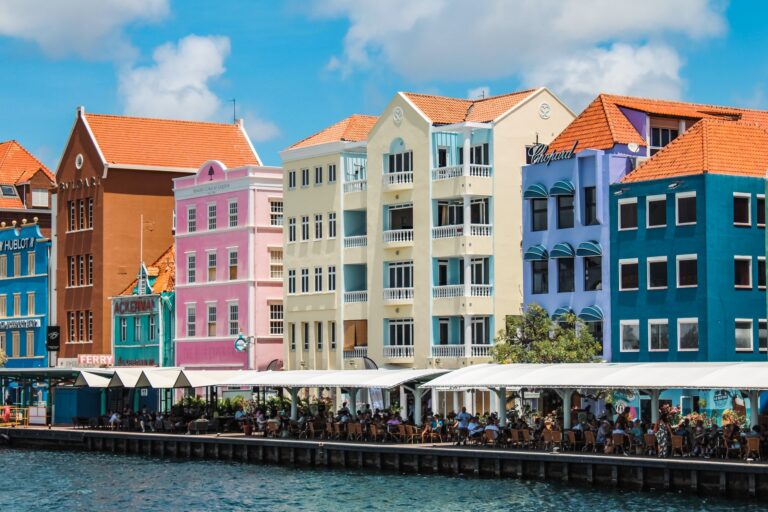
Willemstad's historic inner city and harbour form a UNESCO World Heritage Site encompassing Punda, Otrobanda, Pietermaai and Scharloo. The districts illustrate different stages of the city's development rather than one uniform architectural style. Queen Emma Bridge connects Punda and Otrobanda across Sint Anna Bay and swings aside for shipping.
Combine a harbour walk with Kurá Hulanda Museum in Otrobanda. Its exhibitions address the transatlantic slave trade and the African heritage that helped shape Curaçao and the wider Caribbean.
Try eastern watersports or an offshore excursion
Spanish Water, in eastern Curaçao, is a base for activities including windsurfing lessons and paddleboarding. It offers an alternative to spending every day on an open-coast beach.
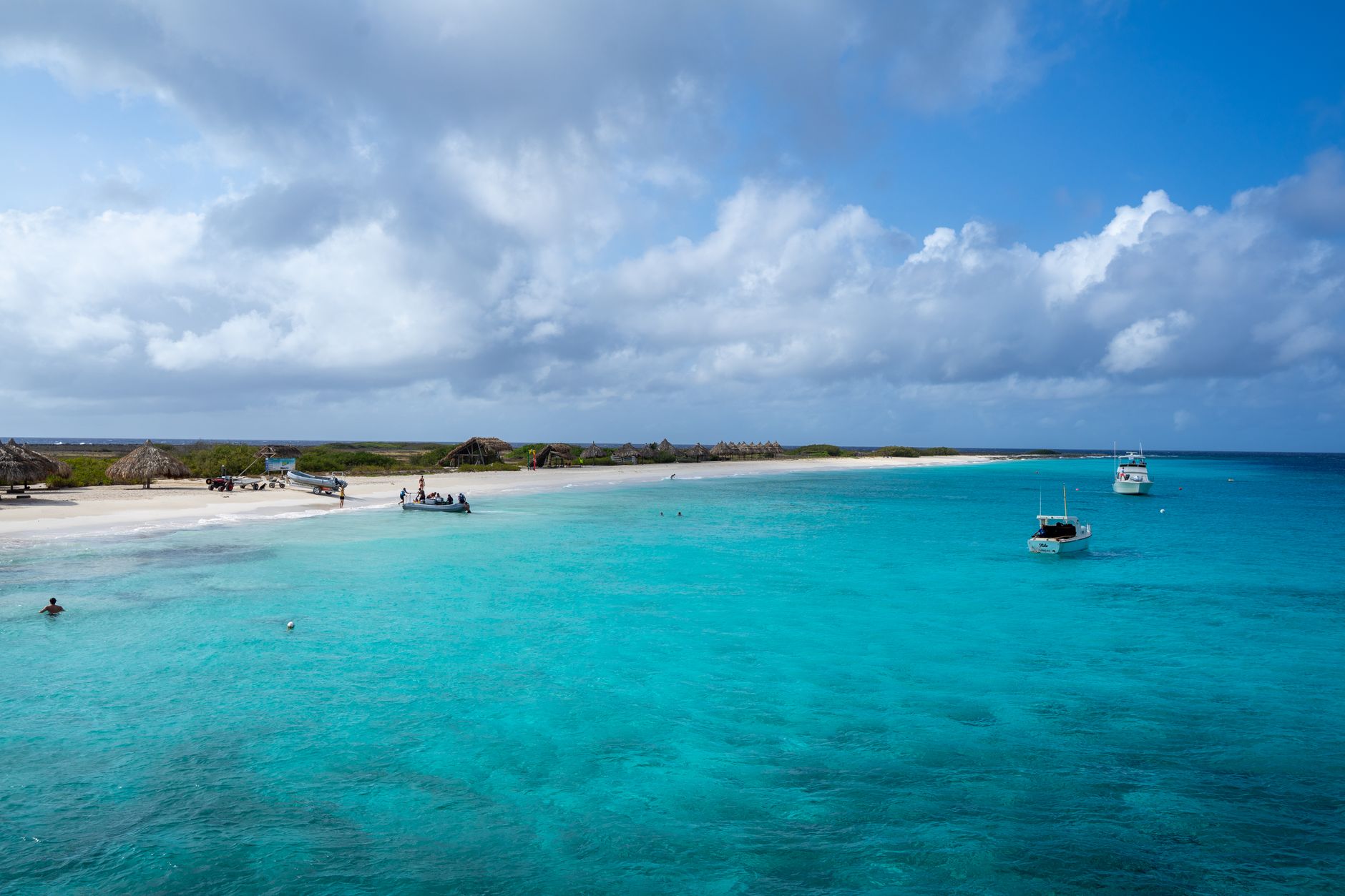
Klein Curaçao is an uninhabited island southeast of the main island, visited for its beach, snorkelling and lighthouse. Treat a boat excursion there as a separate outing when planning your itinerary, and check the operator's departure arrangements and sea-condition policy before booking.
Make time for local food
Plasa Bieu in Willemstad is a food market where visitors can try traditional Curaçaoan cooking. Goat stew and funchi, a cornmeal accompaniment, offer a useful introduction to local dishes. A market lunch adds a different experience from the beach restaurants, so leave room for both when planning where to eat.
Holiday rentals in Curaçao
Holiday accommodation in Curaçao includes apartments, private holiday homes and villas, with self-catering and oceanfront options among the types travellers can consider. An apartment may suit a couple planning regular outings, while a multi-bedroom home can give families or groups separate sleeping spaces and shared living areas.
Choose the region before comparing individual properties. A western base makes sense for repeated beach and national-park outings; a Willemstad base prioritises the capital's heritage; an eastern base suits plans centred on Jan Thiel Beach and Spanish Water. Check the property's precise location rather than relying only on its regional label.
For coastal accommodation, distinguish an ocean view from direct access to a usable swimming beach. Compare kitchen facilities, bedroom layouts, parking and air-conditioning arrangements, and check whether electricity charges are included. Longer stays also warrant checking laundry facilities and grocery access.
Curaçao International Airport is the main air gateway, with taxis and car-rental services available. A rental car offers flexibility for exploring different regions, while buses and arranged transport are alternatives that require more itinerary planning. Explore the live holiday rental listings on this page for current availability and property-specific details.
Who should stay in Curaçao?
Curaçao particularly suits travellers who want an independent holiday combining time in the water with cultural and outdoor activities.
Snorkellers, divers and walkers can shape a trip around coastal sites and national-park trails. Choosing accommodation near the places you intend to revisit is more useful than selecting solely by the property's appearance.
Couples and culturally curious travellers can combine harbour walks, museums and local cooking with beach days, rather than choosing between a city break and a coastal holiday.
Families and groups can use self-catering accommodation to manage different meal times and daily plans. Compare the actual layout, beach access and transport arrangements carefully; suitability depends on the property and itinerary, not simply on being in Curaçao.
Frequently asked questions
Where is Curaçao?
Curaçao is in the southern Caribbean Sea, off Venezuela and between Aruba and Bonaire. It is a constituent country within the Kingdom of the Netherlands, and its capital is Willemstad.
Is Curaçao good for a holiday?
Yes—Curaçao suits travellers who want to combine beaches and underwater activities with cultural sightseeing. Willemstad's historic inner city and harbour are UNESCO-listed, while Papiamentu-speaking everyday life gives the island a distinct cultural identity. Papiamentu, Dutch and English are official languages.
What is there to do in Curaçao?
Curaçao offers snorkelling, diving, historic city walks and national-park outings. Explore Willemstad and Kurá Hulanda Museum, hike in Christoffel National Park, or see waves entering the cavern at Boka Tabla in Shete Boka National Park. The Christoffel Mountain climb is strenuous and must start before 10 am. Klein Curaçao offers an offshore excursion for its beach, lighthouse and snorkelling.
What accommodation is available in Curaçao?
Curaçao's accommodation types include apartments, private holiday homes and villas, including self-catering and oceanfront properties. These are destination-wide categories, not a guarantee of current marketplace inventory. Consult the live listings for availability, exact locations, facilities and booking terms.
When is the best time to visit Curaçao?
February through June is a useful choice if you prioritise drier weather, although Curaçao remains warm throughout the year. Rain becomes more likely later in the year and into January. Its position south of the main hurricane belt does not eliminate indirect storm effects such as heavy rain or rough seas.
How do you get to Curaçao?
Most holiday visitors arrive through Curaçao International Airport. Air connections serve North America, Europe, South America and the Caribbean, but routes and schedules should be checked for your travel dates. The airport has authorised taxis and car-rental services, including approved off-airport operators offering arranged shuttles.
Do you need a rental car in Curaçao?
A rental car is useful, but not essential, for a Curaçao holiday. It offers flexibility when visiting several regions, beaches and parks. Buses operate from terminals in Punda and Otrobanda, and taxis or arranged excursions provide alternatives. For a car-free stay, check the actual route, timetable and walking connection for each planned outing.
Which region of Curaçao should I stay in?
Choose Banda Abou for a western beach-and-countryside itinerary, Willemstad for historic urban surroundings, or Banda Ariba for eastern destinations such as Jan Thiel Beach and Spanish Water. These are different geographical bases rather than interchangeable resort names. Check each property's precise location against the places you expect to visit repeatedly.
Which beaches should I visit in Curaçao?
Playa Kenepa Grandi is a western public beach for swimming and snorkelling; Playa Lagun is a narrow, cliff-bordered bay popular with snorkellers and divers. Cas Abao Beach provides facilities including showers, a restaurant and a dive shop. Jan Thiel Beach combines the beach with restaurants and activities in the east.
Where can I try traditional food in Curaçao?
Plasa Bieu in Willemstad is a food market serving traditional Curaçaoan dishes. Look for goat stew and funchi, a cornmeal accompaniment, among the local options. It is a useful lunch stop when exploring the capital rather than an alternative name for a beach restaurant area.
Best areas nearby
Banda Abou
Western region of Curaçao.
Best for: An itinerary focused on western beaches, rural surroundings and outings to Christoffel National Park and Shete Boka National Park.
Willemstad
Curaçao's capital and urban centre.
Best for: Historic harbour districts, architecture, museums and exploring Punda and Otrobanda.
Banda Ariba
Eastern region of Curaçao, east of Willemstad.
Best for: Jan Thiel Beach, eastern coastal dining and watersports around Spanish Water.