Why stay in Willemstad?
Willemstad suits travelers who want cultural sightseeing and restaurants to be part of their everyday holiday routine. Its central districts bring together waterfront architecture, street art, museums and places to eat, so a day does not have to revolve around driving between attractions.
The historic center is particularly useful for exploring on foot. A morning in Punda can lead across the Queen Emma Bridge into Otrobanda, while Pietermaai offers cafés, restaurants and bars for the evening. This combination makes Willemstad worth considering for a stay rather than only a sightseeing stop.
A harbor location is not the same as a beach location. Choose your base around the activities you expect to repeat most often: walking through town, eating out or spending time beside the sea. A Willemstad address alone does not establish walking distance to the historic center.
About Willemstad
Willemstad developed around a natural harbor whose maritime role remains central to the city’s layout and identity.
A city on both sides of Sint Anna Bay
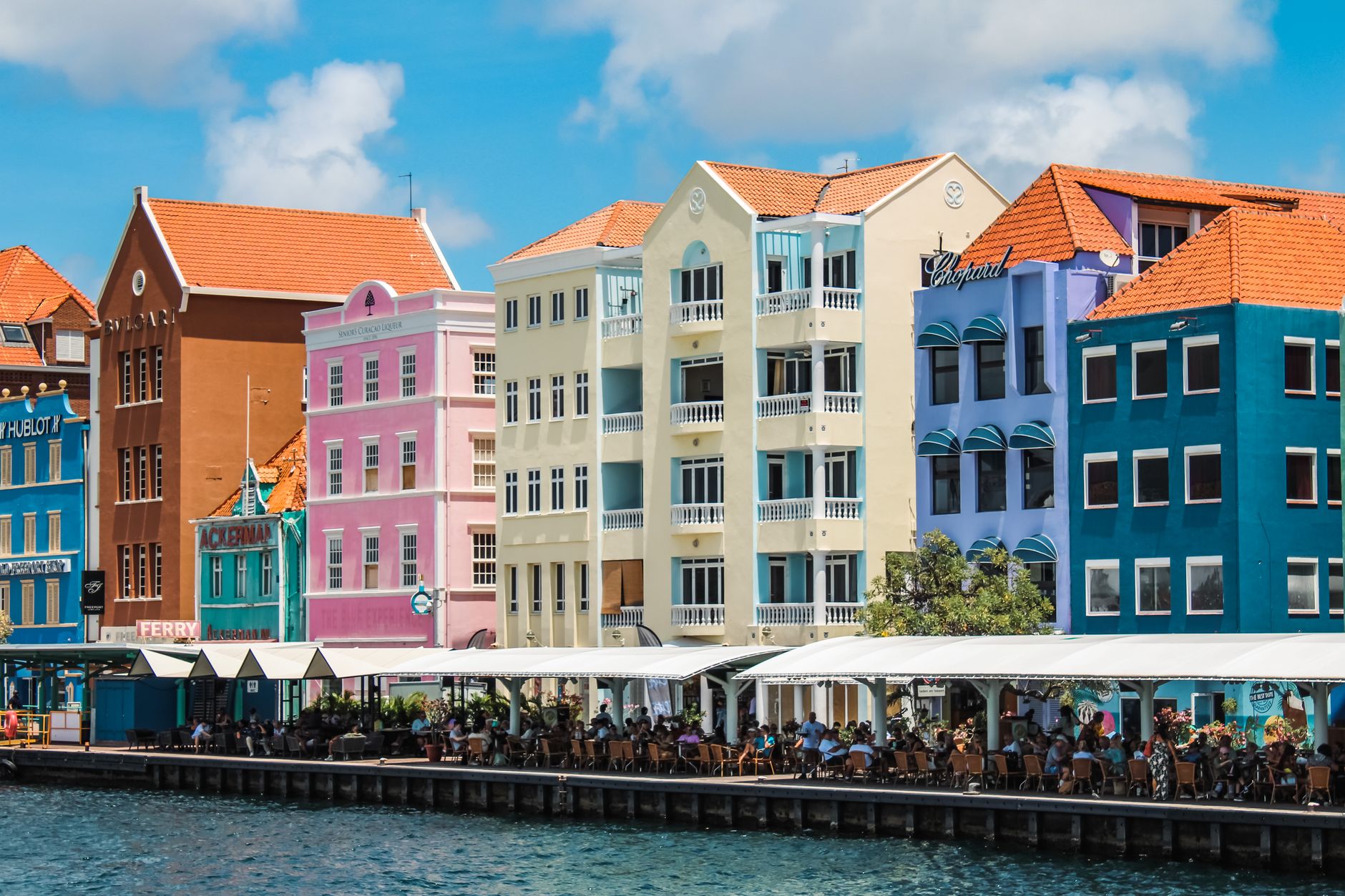
Punda occupies the eastern side of Sint Anna Bay, while Otrobanda lies across the water to the west. The Queen Emma Bridge provides the pedestrian connection between them. These neighborhoods belong to Willemstad; neither represents the whole city or the wider destination.
Pietermaai and Scharloo complete the quartet of historic districts. Beyond this central ensemble, the wider city includes residential neighborhoods and coastal areas, making the precise location of a holiday rental more useful than its city name alone.
Trading history and Caribbean architecture
The Dutch established a trading settlement here in 1634, beginning with Fort Amsterdam. The historic inner city and harbor were inscribed on the UNESCO World Heritage List in 1997. The designation covers a defined historic area, rather than every neighborhood in modern Willemstad.
The architecture combines European building traditions with adaptations to the Caribbean climate and influences from the region’s multicultural communities. Look beyond the painted facades to notice galleries, curved gables and the different street patterns of the historic districts.
Things to do in and around Willemstad
Willemstad’s main experiences combine harbor walks, cultural institutions, local cooking and beach outings, with western Curaçao providing a contrasting day trip.
Explore the waterfront and neighborhood streets
Handelskade is the waterfront row of colorful historic buildings on the Punda side of Sint Anna Bay. Cross to Otrobanda to see the buildings across the water, then continue into its streets to explore murals and historic architecture.
The Queen Emma Bridge is itself part of the experience. Built in 1888, the floating pontoon bridge swings aside to allow ships through the harbor entrance. Allow some flexibility when moving between the two sides of town.
Scharloo offers another architectural perspective through its former merchants’ mansions, many now repurposed for contemporary uses. Street art adds a different layer to a walk through the district, making it a useful addition to a route focused on more than the waterfront.
Understand the history behind the buildings
Kurá Hulanda Museum in Otrobanda examines the transatlantic slave trade and the African cultural heritage that has shaped Curaçao and the Caribbean. Its exhibitions provide essential context for understanding the harbor beyond its commercial architecture.
The Mikvé Israel-Emanuel Synagogue in Punda reflects another strand of the city’s history. The present building dates from 1732 and is distinguished by its sand-covered floor. Check visitor arrangements before going, as this remains a place of worship.
Try local cooking and explore Pietermaai after dark
Plasa Bieu, the old market in Punda, brings several local kitchens together for daytime meals. Traditional dishes include goat stew and fish served with cornmeal accompaniments. Treat it as a lunch destination and check opening arrangements before making a special trip.
Pietermaai offers a different dining setting, with restaurants, cafés and bars among its historic buildings. Nieuwestraat is a useful starting point for exploring the district. If evening dining is a priority, consider the walking route back to your accommodation when comparing properties.
Combine the city with beaches and western excursions
Mambo Beach combines a sandy beach with shops, restaurants and entertainment outside the historic center. It suits a beach day when you want places to eat close at hand. Check beach access arrangements and any separate charges for loungers or other facilities.
Banda Abou provides a contrasting excursion into western Curaçao. Playa Porto Mari is known for its double reef, while Christoffel National Park offers hiking trails and the more demanding climb of Christoffel Mountain. These are trips beyond Willemstad, not attractions within its historic districts. Check the park’s current entry and mountain-start rules before setting out.
Warm weather supports visits throughout the year. February through June is generally a useful choice when drier conditions are a priority, while October through December are typically wetter. Plan walking and hiking with the heat in mind rather than filling every daylight hour with outdoor activities.
Holiday rentals in Willemstad
Holiday accommodation to look for in Willemstad includes self-catering apartments, private holiday homes and villas. An apartment can suit a couple or solo traveler planning frequent meals out, while a multi-bedroom home may work better for families or friends who want shared living space and the option to cook.
Choose the location before comparing individual amenities. For a sightseeing-led stay, check the actual walking route to Punda, Otrobanda or Pietermaai. For a beach-led stay, establish whether the property has usable beach access rather than only a sea view. If you plan to rent a car, confirm parking arrangements; for a longer stay, check kitchen equipment, laundry facilities and any separately charged utilities.
Curaçao International Airport offers taxis, public bus connections and car rental services. Arrange your onward journey around the property’s exact address. Central sightseeing can be done on foot, but independent trips to western beaches and parks call for a transport plan. Public buses and organized excursions provide alternatives to driving.
Explore the live holiday rental listings on this page for current availability, property details and booking conditions. Confirm any essential feature with the host rather than assuming it is standard.
Who should stay in Willemstad?
Willemstad is particularly suitable for travelers who want architecture, history and food alongside time by the sea. Couples can combine neighborhood walks with evening dining, while solo visitors may value having several cultural attractions within the central districts.
Families and groups should consider Willemstad when their plans mix city activities with beach outings, choosing accommodation around bedroom arrangements, transport and the pace of their trip. Travelers whose main priority is repeated visits to western bays or hiking areas should also compare Banda Abou: the better base depends on where they expect to spend most of their days.